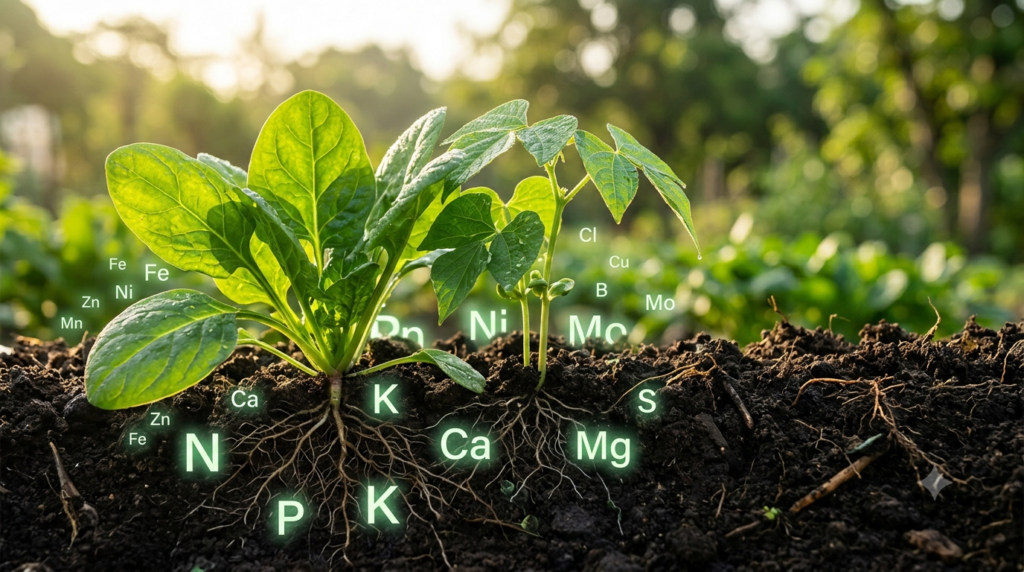
As a beginner one should know what plant need to grow well and how one should keep their plants deficiency free . Plant required Nutrients to complete their life cycle . There are 17 such essential plant nutrients require for the plant to sprout , grow and bloom. These are classified into two main groups based on the amount plant needs.
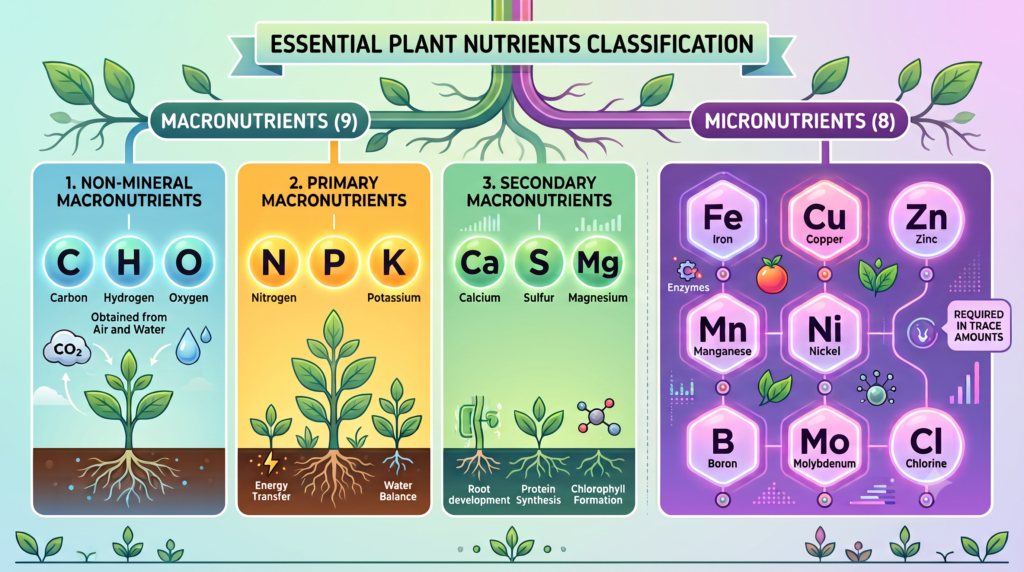
Macronutrients: Macronutrients are further divided into 3 groups.
- Non mineral macronutrients: Carbon (C), Hydrogen (H), Oxygen (O)
- Primary macronutrients: Nitrogen (N), Phosphorous (P), Potassium (K).
- Secondary macronutrients: Calcium (Ca), Sulphur (S) ,Magnesium (Mg)
Micronutrients :There are total of 8 micronutrients.
Iron (Fe), Copper (Cu), Zinc (Zn), Manganese (Mn), Nickel (Ni), Boron (B), Molybdenum (Mo) ,Chlorine (Cl).
Macronutrients
These are the 9 nutrients plants needs in large amount. Non mineral nutrients carbon, Hydrogen , Oxygen are obtain from the carbon dioxide (CO2) and water (H2O)while other macronutrients are absorbed from the Soil as Mineral nutrients .
Non Mineral Nutrients:
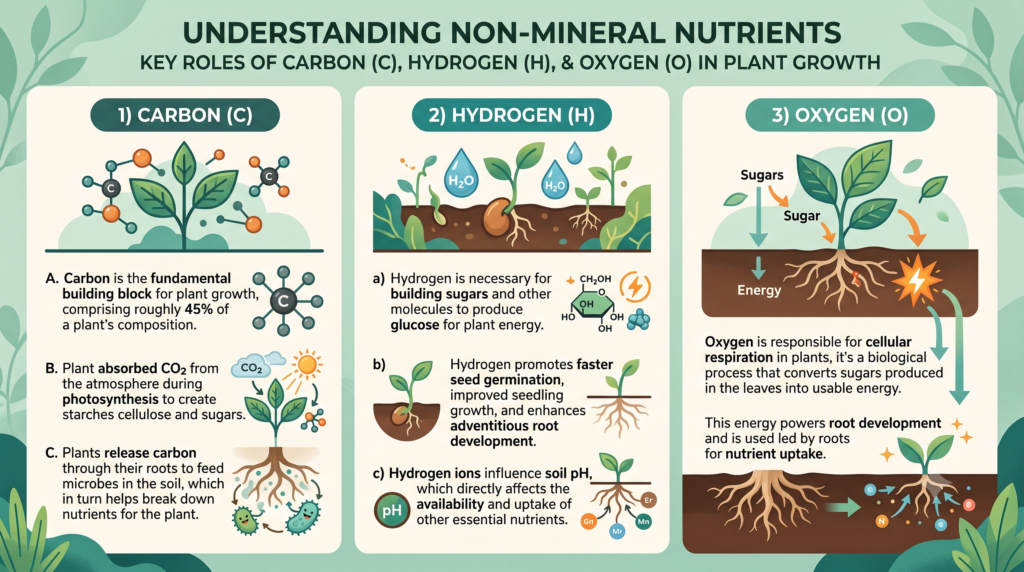
1.Carbon (C):
- Carbon is the fundamental building block for plant growth, comprising roughly 45% of a plant’s composition.
- Plant absorbed CO2 from the atmosphere during photosynthesis to create starches cellulose and sugars.
- Plants release carbon through their roots to feed microbes in the soil, which in turn helps break down nutrients for the plant.
2.Hydrogen (H):
- .Hydrogen is necessary for building sugars and other molecules to produce glucose for plant energy.
- Hydrogen promotes faster seed germination, improved seedling growth, and enhances adventitious root development.
- Hydrogen ions influence soil pH, which directly affects the availability and uptake of other essential nutrients.
3.Oxygen (O)
Oxygen is responsible for cellular respiration in plants, it’s a biological process that converts sugars produced in the leaves into usable energy . This energy powers root development and is used by roots for nutrient uptake .
Primary Micronutrients
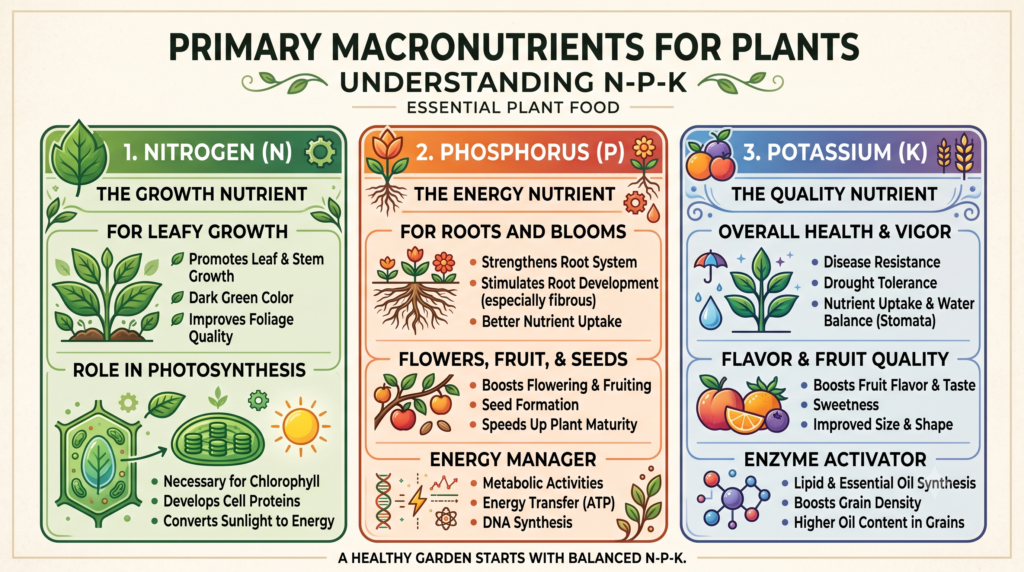
Nitrogen, phosphorus and Potassium (NPK) are the three critical primary macronutrients that keep plants thriving. Think them as the core fuel behind strong roots, lush leaves and bigger blooms. Commonly referred to as the “ Big Three” and represented by the abbreviation NPK .
Nitrogen (N): For Leafy Growth
Nitrogen often refer as the growth nutrient.
- It promotes the growth of leaves and stems and gives leaves dark green colour and improve foliage quality.
- Nitrogen is the key component in photosynthesis, necessary to develop cell proteins and chlorophyll which converts sunlight into energy.
Phosphorus(P) : For Roots and Blooms.
Phosphorus is often refer as “ Energy nutrient”.
- It is important macronutrient for Strengthening the root systems. It stimulates root development (Particularly the development of fibrous roots) for better nutrient uptake .
- Phosphorus boost flowering , fruiting and seed formation.
- Promotes fast and vigorous growth and speedy maturity of plant.
- Acting as an energy manager, phosphorus is essential for various metabolic processes such as photosynthesis, energy transfer, and DNA synthesis.
Potassium (K): For Overall Health and Vigor.
It is often referred as the “ Quality Nutrient”.
- Potassium boost the flavour , taste and sweetness in fruits by regulating the production and movement of sugars from leaves to the developing fruits and vegetables.
- Potassium play important role in regulating various plant process including nutrient uptake, regulating water balance , act as a disease resistance and drought tolerant agent .
- It acts a “enzyme activator” for lipid and essential oil synthesis.it increases the accumulation of essential oil within the leaves and flowers of many herbs , aromatic and medicinal plants .
- Potassium helps to boost the size, shape and density of grain with higher percentage of oil content .
Secondary Macronutrients
Secondary Macronutrients are those usually needed in moderate amounts compared to the primary essential nutrients .
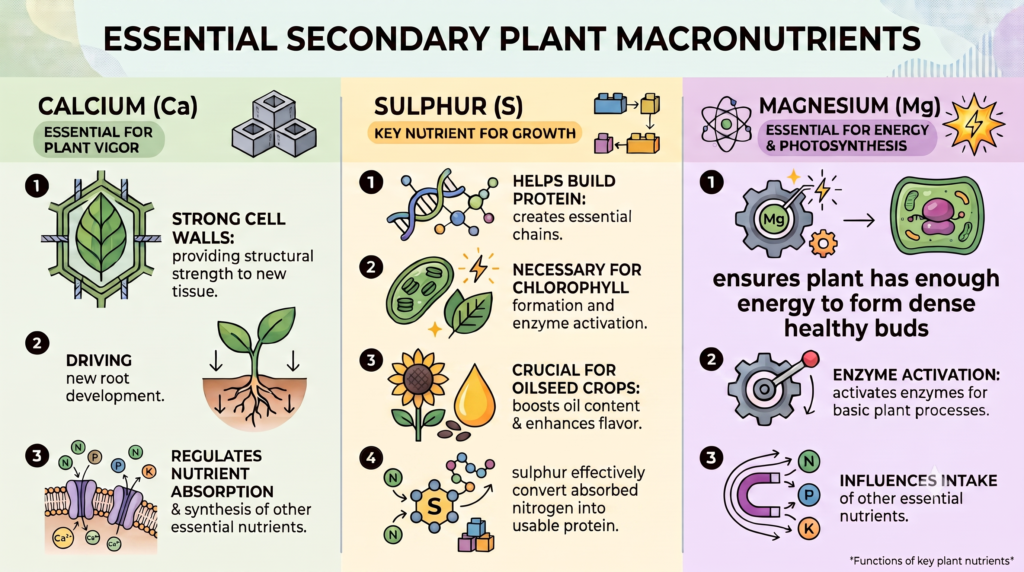
Calcium (Ca)
calcium is essential for improving plant vigor, it ensures.
- Strong cell walls and providing the structural strength to new tissue.
- Driving the new root development.
- Regulates nutrient absorption and supports the synthesis of other essential plant nutrients .
Sulphur (S)
Sulphur is a one of the key nutrient plants need to grow .
- It helps them build protein.
- It is necessary for chlorophyll formation and enzyme activation.
- Sulphur effectively convert absorbed nitrogen into usable protein.
- Sulphur is crucial for the oilseed crops as it boost oil content and enhances flavour.
Magnesium (Mg)
- One of the key element in the chlorophyll production making it essential for photosynthesis and energy production . During flowering plants need extra energy , magnesium ensures plant has enough energy to form dense , healthy buds.
- Enzyme Activation: Magnesium activates enzymes required for basic plant processes.
- .Magnesium Influence the intake of other essential nutrients.
Micronutrients
Micronutrients are essential trace elements needed for healthy plant growth. Although plants require them in very small amounts, they play critical role throughout the plant life cycle. There are total of 8 micronutrients.
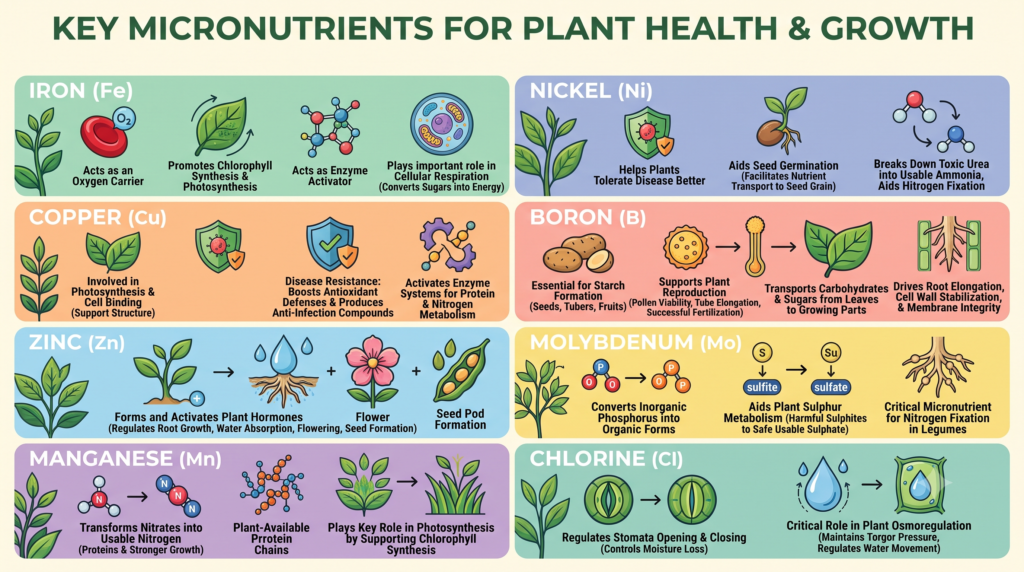
Iron (Fe)
- Iron act as a oxygen carrier .
- Iron promotes the synthesis of chlorophyll, the pigment responsible for photosynthesis.
- It acts as enzyme activator.
- Iron plays a important role in cellular respiration, a process that converts sugars into energy.
Copper (Cu)
- Copper is involved in photosynthesis and the binding of cells that support plant structure.
- Disease Resistance: Boosts the plants natural antioxidant defences and produces compounds that help fight off infections.
- Activates enzyme systems responsible for protein and nitrogen metabolism.
Zinc (Zn)
Zine play a key role in forming and activating plant hormones that regulate root growth , water absorption , flowering and seed formation.
Manganese (Mn)
- It plays a key role in transforming nitrates into plant available nitrogen, so crops can quickly use it to make proteins and grow stronger.
- Manganese plays a key role in photosynthesis by supporting chlorophyll synthesis.
Nickel (Ni)
- Nickel helps plants tolerate disease better .
- It aids in the seed germination , facilitating transport of nutrient to seed grain .
- It breaks down toxic urea into usable ammonia and aids in nitrogen fixation.
Boron (B)
- Boron is essential for starch formation in seeds, tubers and fruits.
- Boron plays a key role in plant reproduction by supporting pollen viability, pollen tube elongation and successful fertilisation .
- Boron play key role in transporting carbohydrates and sugar from mature leaves to actively growing parts of the plant
- Boron is a critical micronutrient that drives root elongation, cell wall stabilisation, and membrane integrity ensure strong root development boosts plant water and nutrient uptake.
Molybdenum (Mo)
- Molybdenum convert inorganic phosphorus into organic forms in the plant.
- Molybdenum aids plant sulphur metabolism. which converts harmful sulphites into safe usable sulphate.
- .Molybdenum is the most critical micronutrient for nitrogen fixation in legumes .
Chlorine (Cl)
- Chlorine play an important role in regulating the opening and closing of stomata to control moisture loss
- Chlorine plays critical role in plant osmoregulation. It helps to maintain turgor pressure and regulate water movement.